


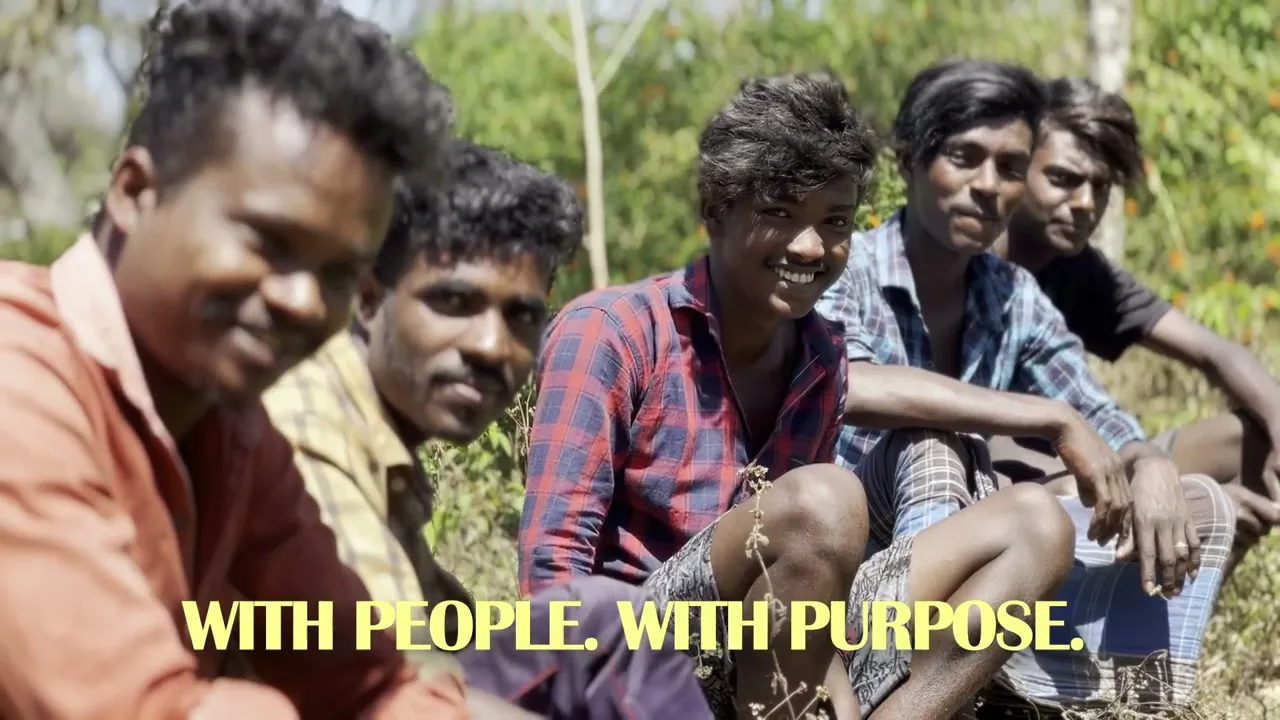
We remove Lantana at landscape-scale across the UNESCO Nilgiri Biosphere Reserve, convert the biomass into stable, soil-grade biochar through state of the art pyrolysis.
With indigenous forest stewards leading the way, we sequester durable carbon, restore native grassy understory, and reopen wildlife migration corridors.
One tonne of biochar holds roughly 1.8 tonnes of CO₂ in Nilgiri soil for centuries
One tonne of biochar holds roughly 1.8 tonnes of CO₂ in Nilgiri soil for centuries













Impact you can verify in person
20+ years in conservation and community
Mapped, monitored, restored, and measured down to the last hectare
250+ hectares
restored through lantana removal


300+
indigenous livelihoods created

40,000 tCO2e
certified, durable carbon sequestration by 2030
3 million+
grass slips produced annually






The problem we inherited
Maybe the elephant is in the village because the forest is invaded by thorns.

We go beyond carbon
A proven, circular restoration model that funds itself
Carbon finance funds habitat restoration, indigenous community-owned enterprise, and soil health


Follow a single tonne of Lantana
From a thicket in Bandipur to a tea estate in the Nilgiris
Clearing lantana manually costs up to $1,500 a hectare. We built an innovative closed loop system that earns it back.


Step 1
Harvest and shred
Step 2
Transport and dry
Step 3
Pyrolyse and monitor
Step 4
Bury and enhance
Step 5
Restore and revive



Fund habitat restoration
Durable carbon removal.
Fully Traceable.
When you buy one tonne of biochar, you’ll know the forest plot its feedstock was cut from, the indigenous communities who harvested it, the farm estates that used it and finally, the grass that replaced it.
Two decades of conservation legacy by our sister organizations
Wild Carbon is the next chapter, scaling habitat restoration
Building on the foundational research of The Shola Trust and the community harvesting model of The Real Elephant Collective, WildCarbon uses carbon finance as the vector to scale invasive removal and habitat restoration across South India's UNESCO Nilgiri Biosphere Reserve.

Frequently asked questions
Clarity on WildCarbon’s science, scale, and heritage
Everything you need to know (hopefully)
Wait, what are the Lantana Elephants?
Can I meet your team on the ground?
Never heard of Lantana camara. Is it really that big a problem?
Pyrolysis facilities are notable for failures. How do you guard against technical failures?
Every developer mentions they remove invasives. Why are you different?
What if your MoUs get cancelled and you are kicked out of the forest?
Won't farmers just expect biochar for free?
What carbon certification do you have?
How do you justify a premium price for your carbon certificates ?

